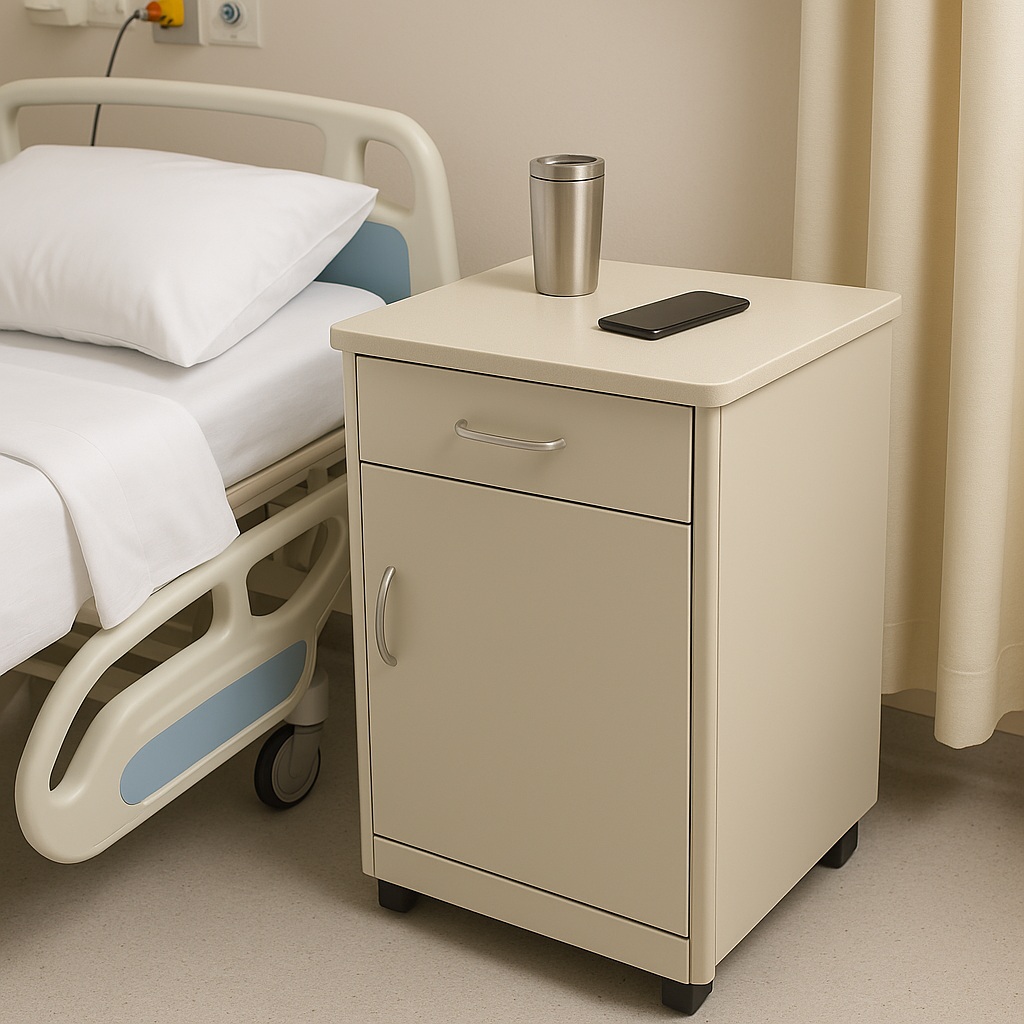
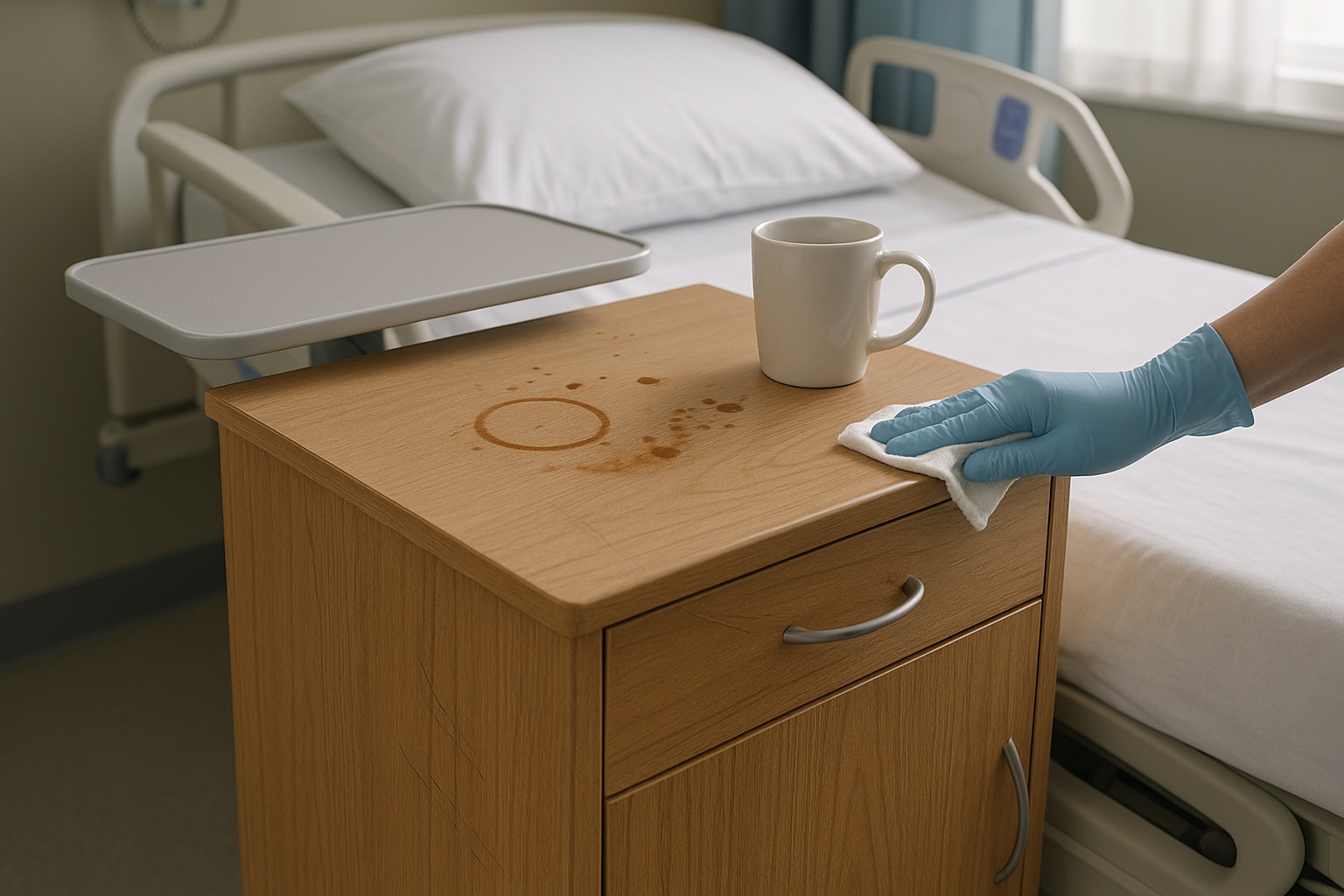
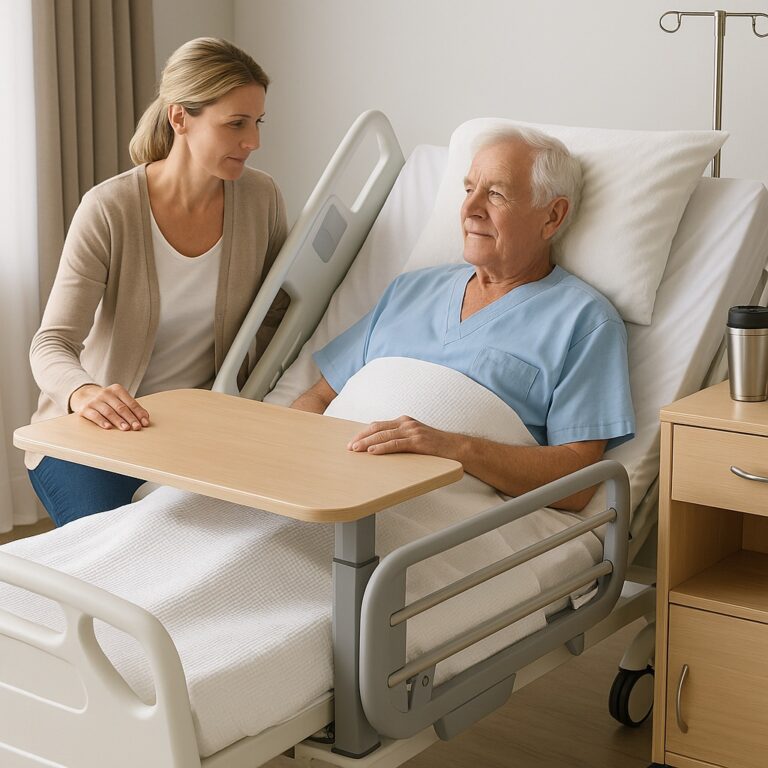
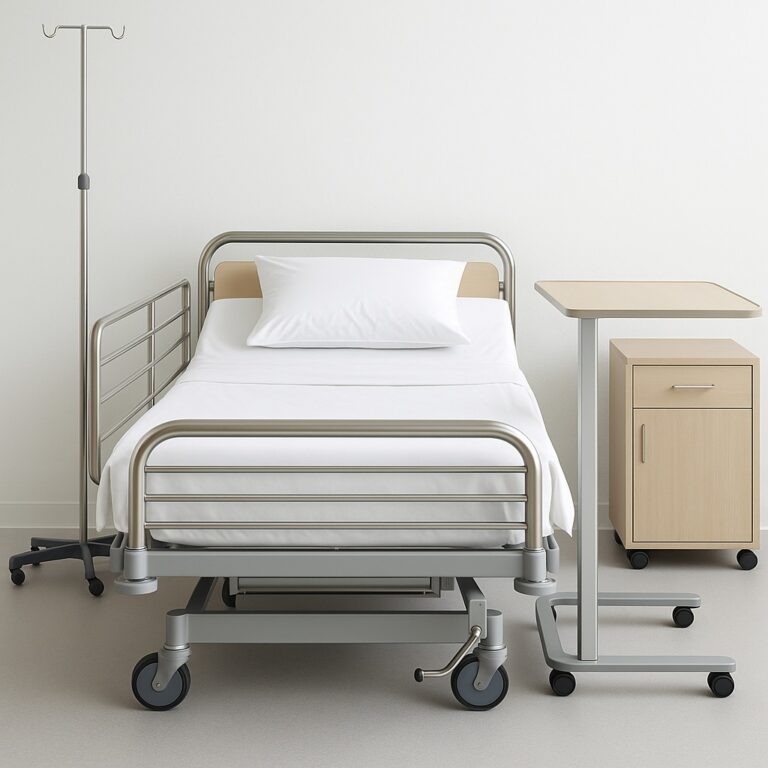
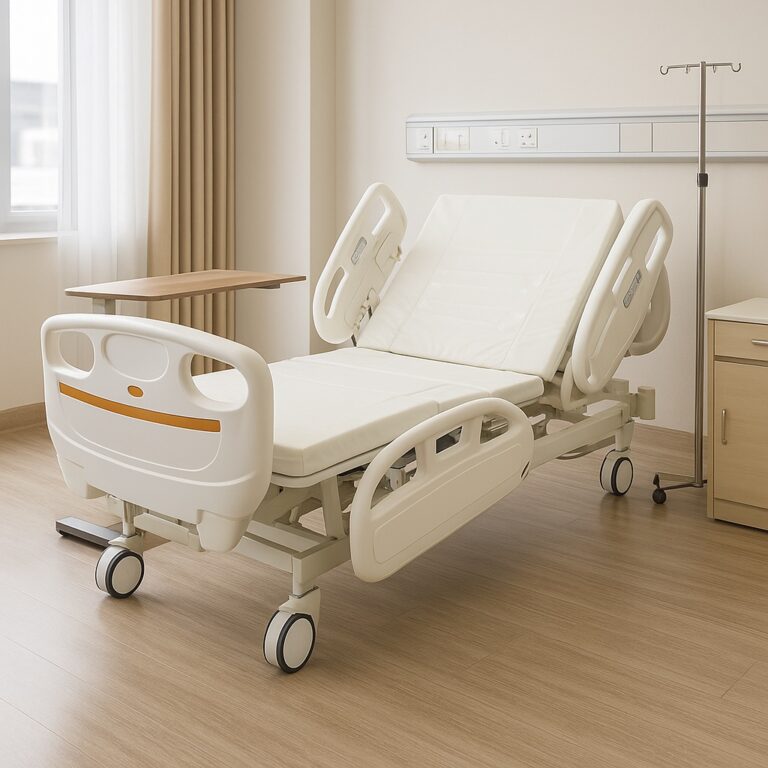
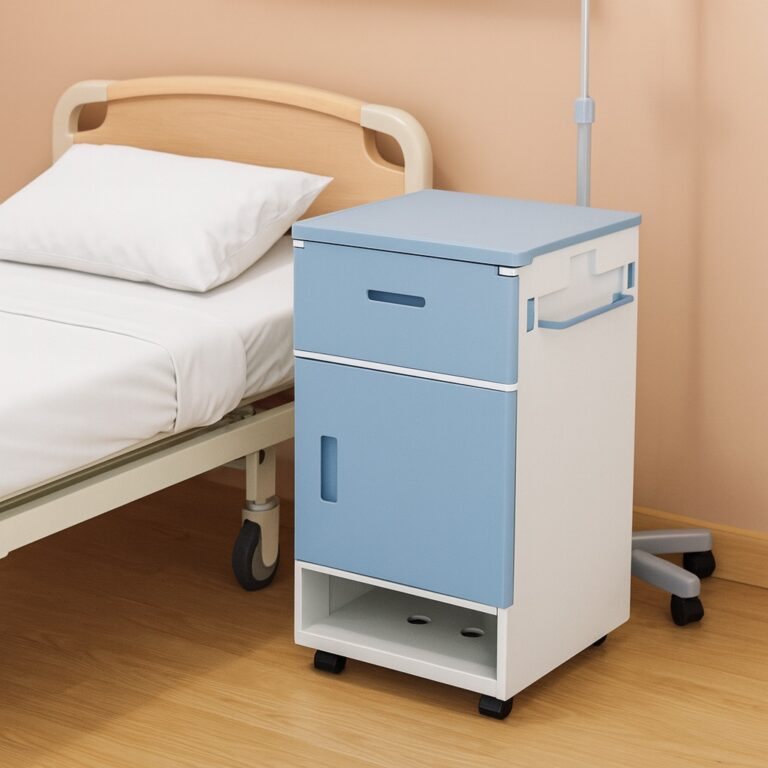
Walk into any ward and you’ll see it: the small cabinet beside the bed that takes hits all day. Drinks, meal trays, charts, phones—everything lands there. If the top surface marks easily or holds stains, cleaning gets harder and the room looks tired fast. That’s why a Hospital Bedside Cabinet with a tough, easy-wipe top isn’t “nice to have.” It’s core to daily work.
Hospital Bedside Cabinet surface durability: why it matters
Cabinet tops are “high-touch.” They face sliding trays, ring scratches from mugs, and wipe-downs across every shift. Scratches catch residue. Stains linger. Staff spend more time rubbing, and the room still doesn’t look fresh. For distributors and hospital buyers, that’s not just an appearance issue—it’s lifetime value, change-out cycles, and uptime.
If you spec a cabinet that resists scratches and stains, housekeeping meets SOPs faster, patient rooms (and families) feel neat, and procurement doesn’t chase replacements every season. It do last longer, simple as that.
Materials for Hospital Bedside Cabinet tops (and how they behave)
Not all top surfaces perform the same. Different materials trade off cost, cleanliness, and longevity. The goal: non-porous, robust, and friendly to wipe-down routines.
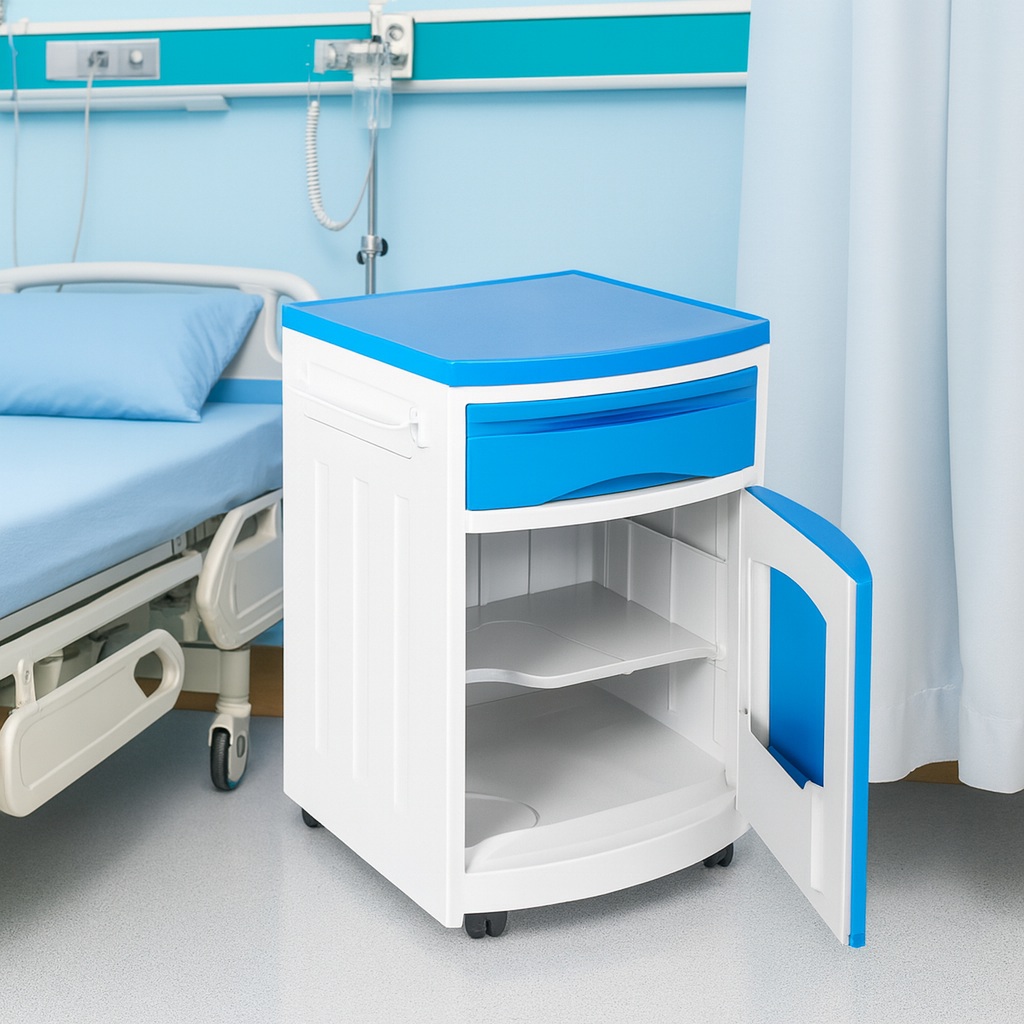
ABS Hospital Bedside Cabinet top
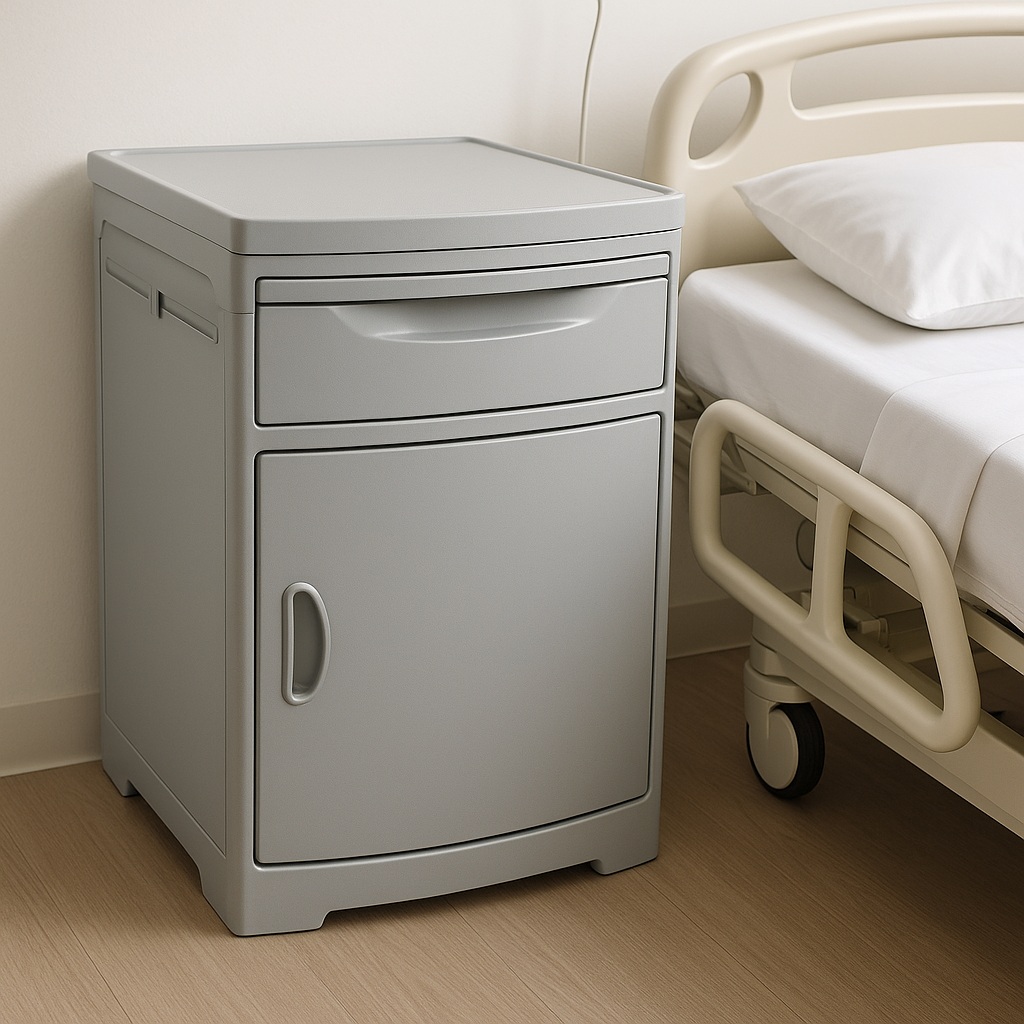
ABS is the common workhorse. On a good build, it shrugs off day-to-day scuffs and most spills. It’s light, cleanable, and budget-friendly. See our Hospital Bedside Cabinet ABS if you want a baseline that ships well for wholesale orders and OEM tweaks.
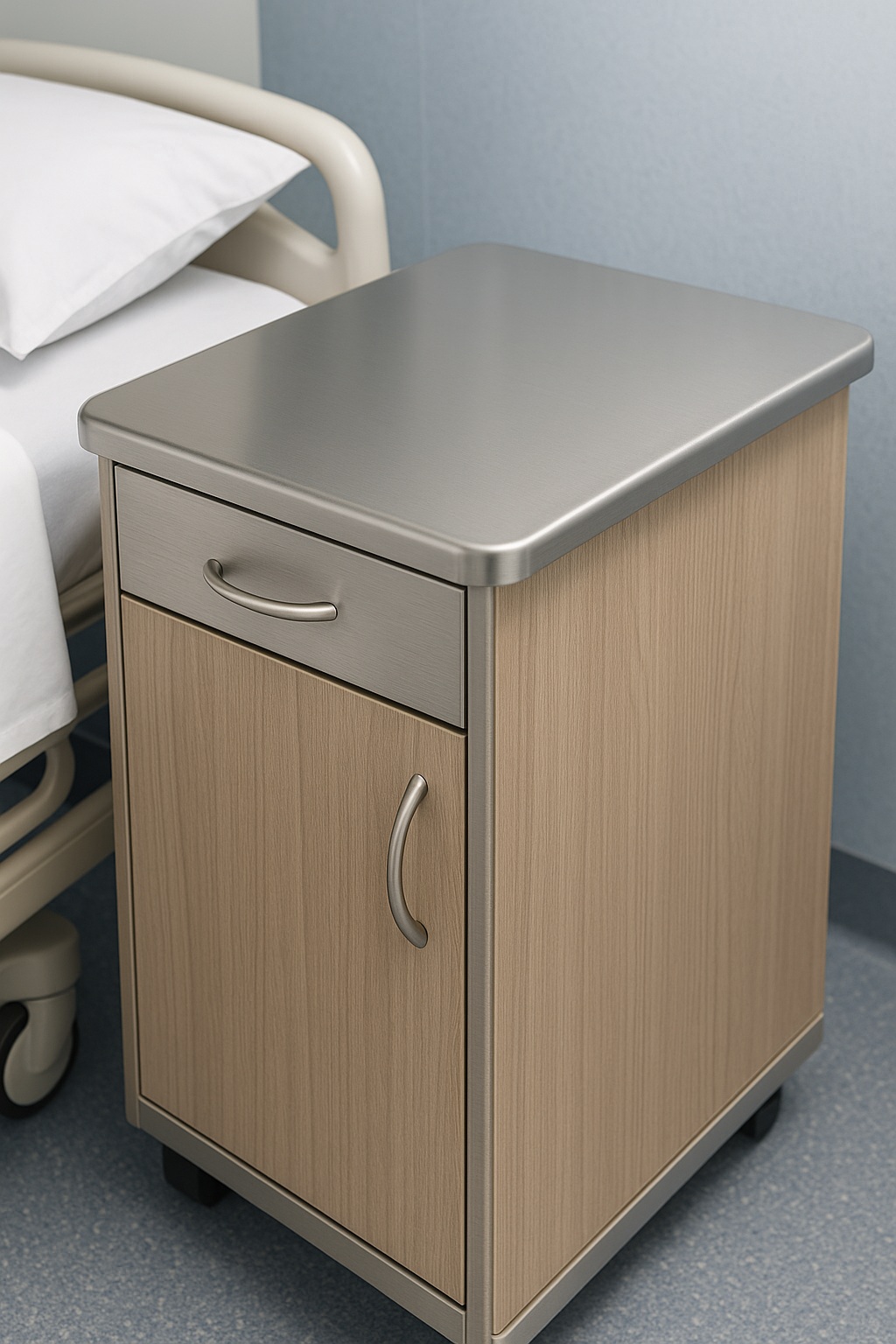
Stainless-steel top for Hospital Bedside Cabinet
Stainless brings muscle. It resists dents and stains, handles heavy trays, and keeps its shape under pressure. Fingerprints can show, but a quick wipe fixes it. Some facilities pair stainless with rounded edges (R10 radius) to avoid edge chipping and make housekeeping faster.
Solid-surface top for Hospital Bedside Cabinet
Solid surface (engineered resin) is premium and tough. It’s non-porous, highly stain-resistant, and minor scratches often buff out. It’s ideal for rooms with high turnover or long wipe-down cycles. Many buyers choose this when they want fewer replacements over time—true total-cost logic without posting numbers.
Laminated or coated wood (lighter-duty rooms)
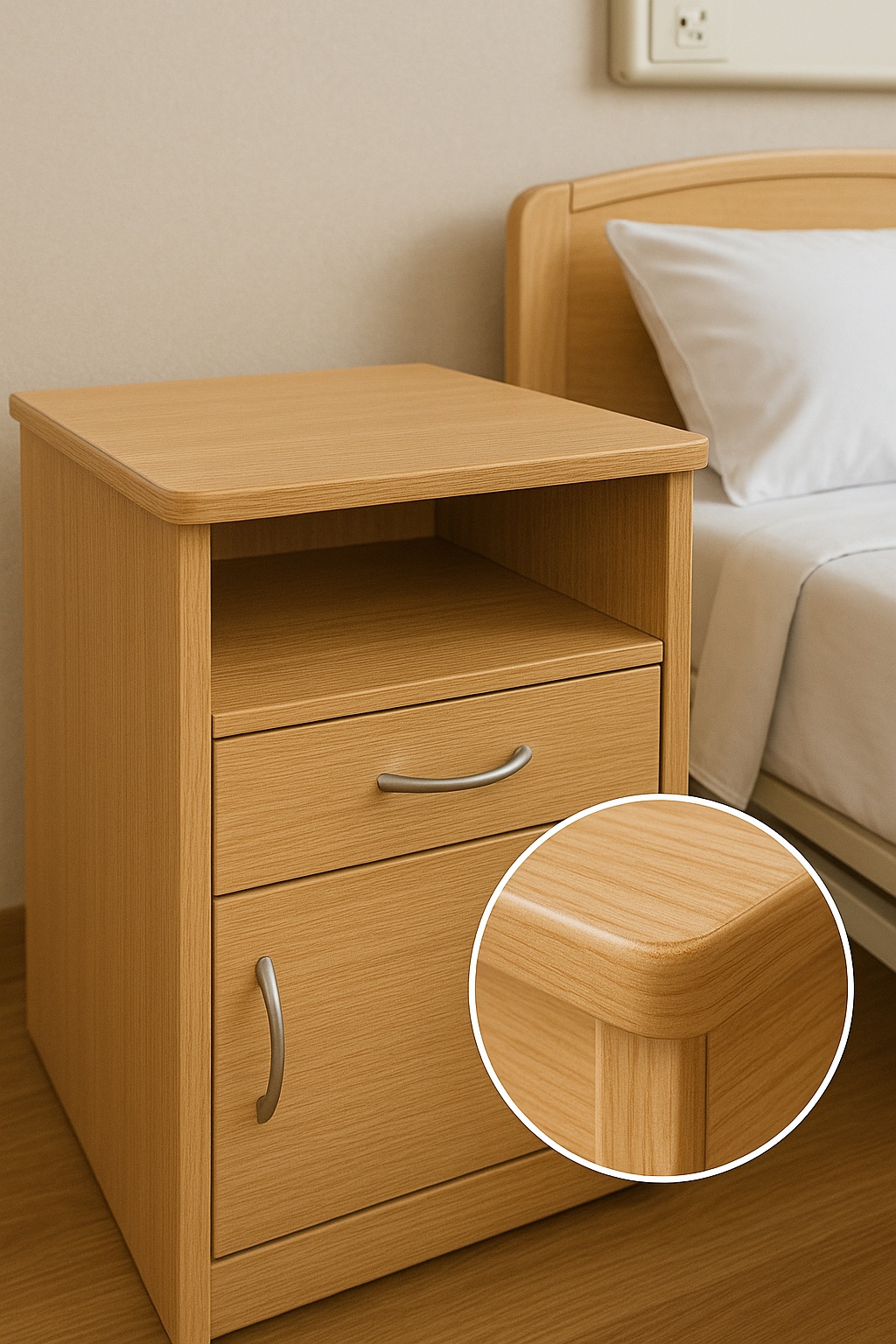
Laminates can look warm, but the edge banding and seams need real attention. If a corner chips, liquids sneak in and the panel ages quick. Coated wood helps, but coatings wear. We see it used more in Home Care Bed settings or low-traffic areas than busy wards.
Tip: whichever top you choose, push for seamless corners, edge sealing, and minimal joints. Less places for grime to hang out.
Real-world scenarios (what actually happens every day)
Rounds rush: A cart stops by, a tray lands, and slides two inches. A weak top already shows a scratch. A tougher top? No drama.
Snack drop: Coffee, juice, you name it. On a non-porous top, a wipe and gone. On a porous or chipped edge, it shadows.
Tech shuffle: Phones, tablets, chargers scrape across the top dozens of times. Scratch-resistant surfaces still look new-ish after months. The others… not so much.
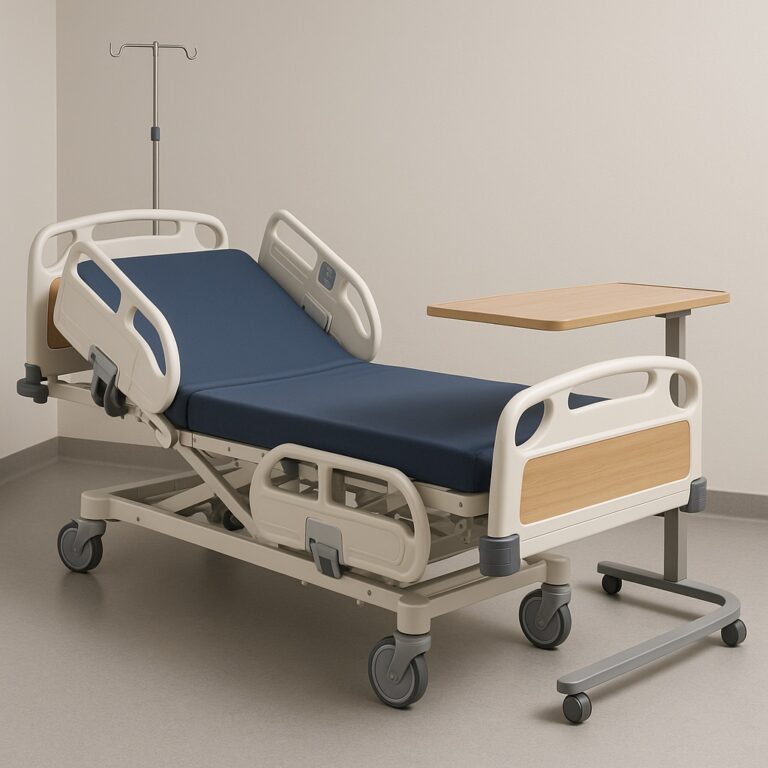
If your facility also uses Hospital Overbed Table platforms, consider matching surface logic there too. Same high-touch problem, same fix.
Cleanability expectations: what housekeeping teams tell us
The team wants a surface that cleans fast and behaves the same after the hundredth wipe. In spec sheets, you’ll hear phrases like “chemical compatibility,” “edge-sealed,” and “seamless radii.” In plain words: the top shouldn’t swell, bleach, or get rough when you follow the wipe-down SOP.
To make the workflow smoother around the bed space, buyers often pair cabinets with Ward Screen solutions and other Hospital Bed Furniture that share the same easy-clean design, so staff don’t switch methods every time they move an arm.
OEM/ODM angles (HOSPITAL BED SOLUTIONS that fit your ward)
One size doesn’t fit all rooms. That’s why we offer flexible HOSPITAL BED SOLUTIONS across beds, tables, and cabinets:
Need premium tops for high-traffic rooms? Ask for solid-surface with radius corners and hidden fasteners.
Need robust budget units for bulk rollouts? ABS tops with thicker skins and reinforced corners do the job.
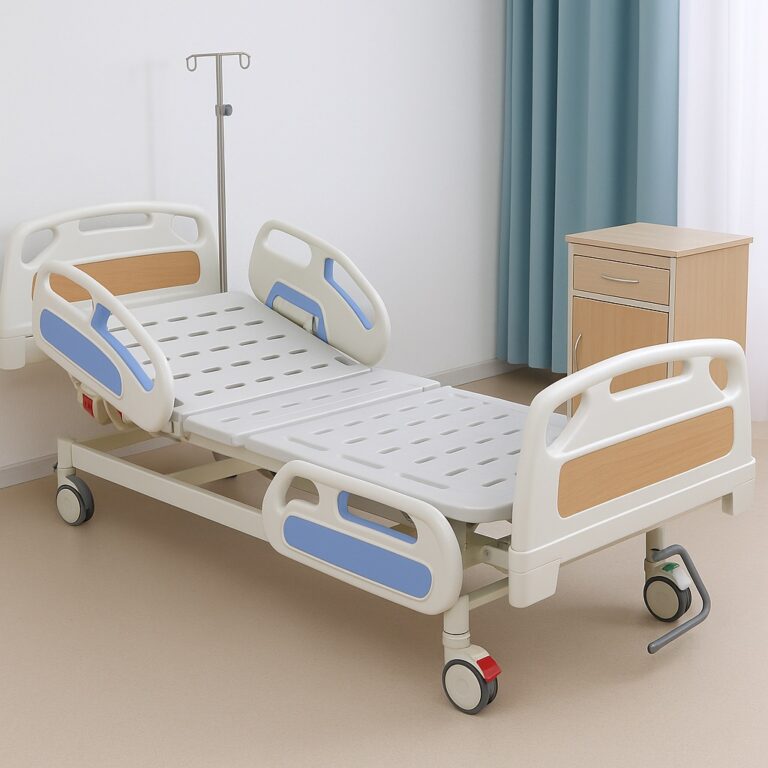
Want everything to match bed frames and rails? We can align colorways and hardware across your Hospital Beds lineup so the space looks clean and unified.
We build for wholesale, bulk purchase, and private label—yes, full OEM/ODM—because distributors and facilities don’t all run the same playbook.
Procurement checklist for Hospital Bedside Cabinet tops
When you’re comparing models, use this quick list:
Material proof — Is it ABS, stainless, or solid surface? (Match to room turnover.)
Edge & seams — Ask for radius corners (R10), edge sealing, and minimal joints.
Scratch demo — Get a sample; drag a tray lightly. If it scars easy, you know.
Wipe-down repeatability — Confirm the top keeps its look after many cycles.
Repair path — Can light scratches be buffed? Or do you replace the whole unit?
For ICU-grade frames or mixed wards, many buyers also cross-shop beds like Electric Hospital Beds, Manual Hospital Beds, and ICU Hospital Beds to keep surfaces and finishes consistent across the room. It looks better and keeps training simple.
Cost talk without numbers (because the math depends on your site)
We won’t throw fake numbers at you. But here’s the pattern we see: a tougher, non-porous top that resists scratches and stains usually means fewer swap-outs, fewer service tickets, and less “why is this cabinet so old already?” moments. Solid surface often wins in heavy-use wards. ABS wins when you scale huge orders and want durability per unit. Stainless wins where impact and heat matter. Laminates? Fine for calmer rooms, but watch edges.
We’re not say it’s magic—just proven gear that doesn’t quit early.
Use cases that tie the room together
Standard wards: ABS tops on Hospital Bedside Cabinet + matched finishes on beds. Easy to stock, easy to roll out.
High-load rooms: Solid-surface tops + stainless hardware, paired with Hospital Overbed Table surfaces that share the same wipe profile.
Home-care or step-down: Laminated tops aligned with Home Care Bed looks, but specify edge sealing to keep them tidy longer.
System build-outs: Lock in colors and handles across cabinets, screens, and Hospital Bed Furniture so replacement units slot right in.
Conclusion: pick the top that stays clean-looking longer
The cabinet beside the bed works harder than it looks. Choose a top that resists scratches and stains, and you save time, keep rooms neat, and avoid short-cycle replacements. Whether you go ABS, stainless, or solid surface, push for non-porous skins, sealed edges, and smooth radii. Pair it with matching beds and tables for a room that cleans fast and feels right.