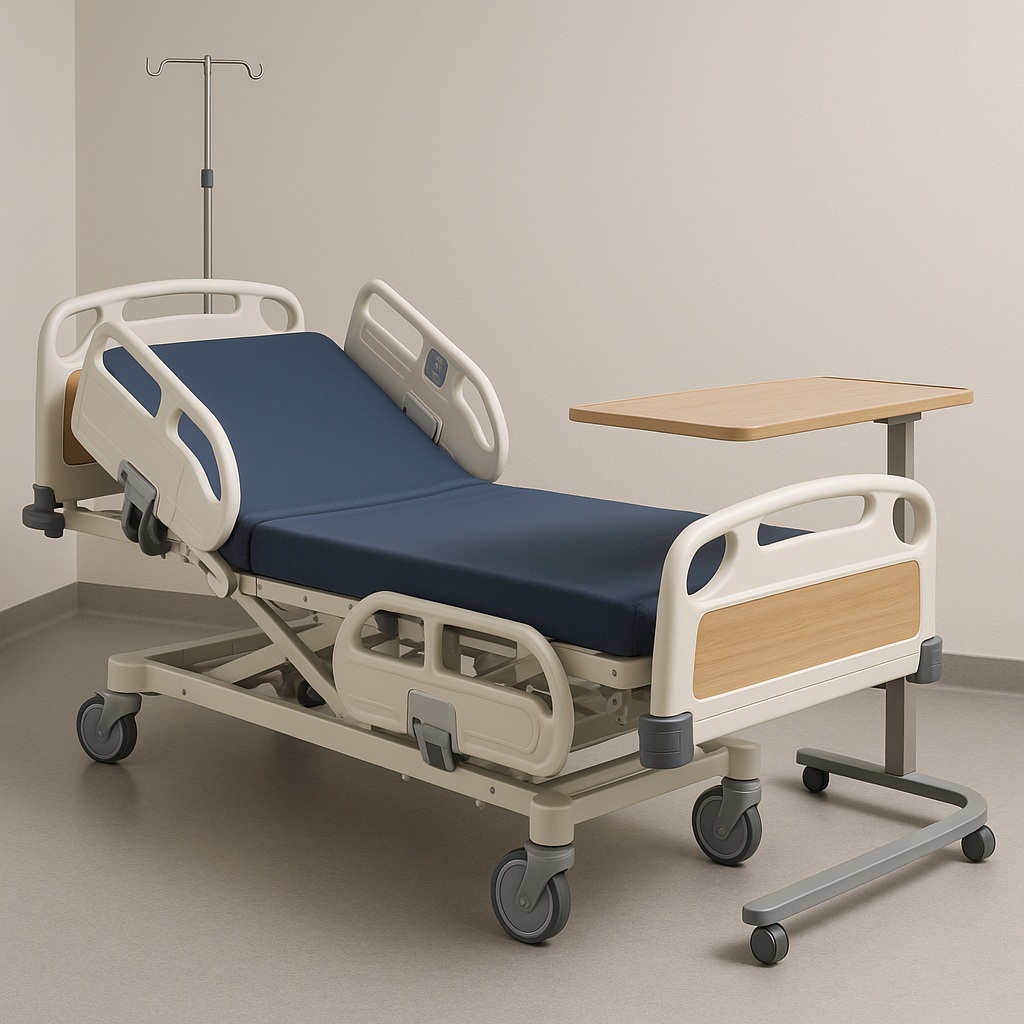
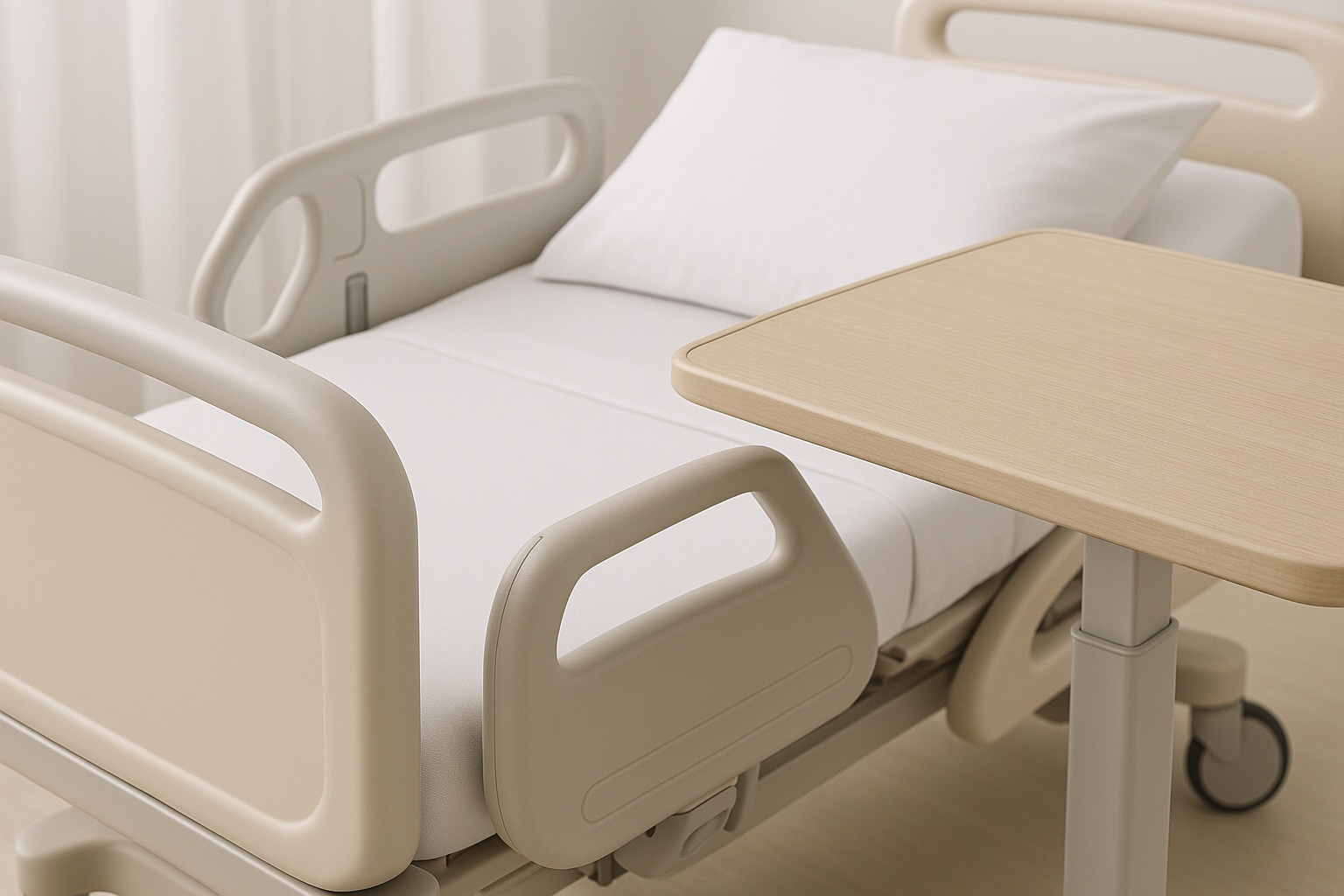
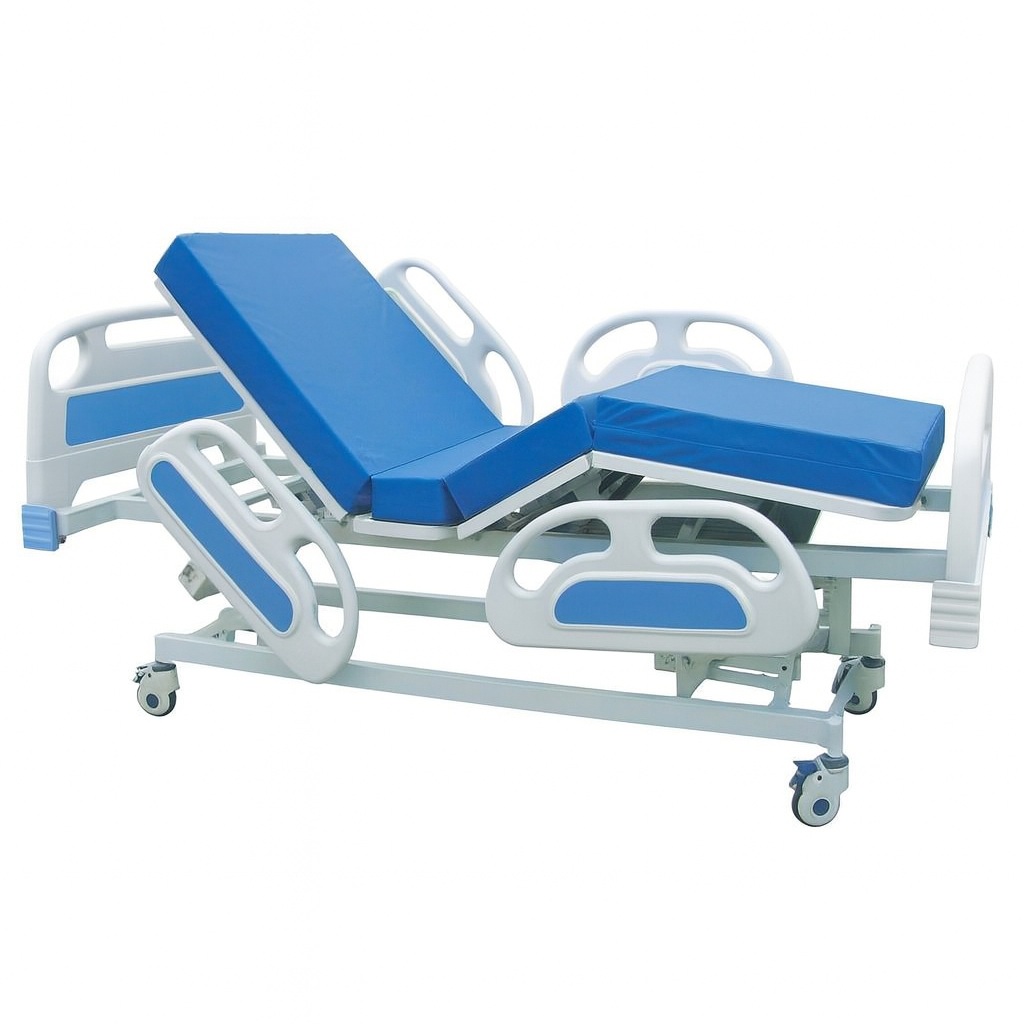
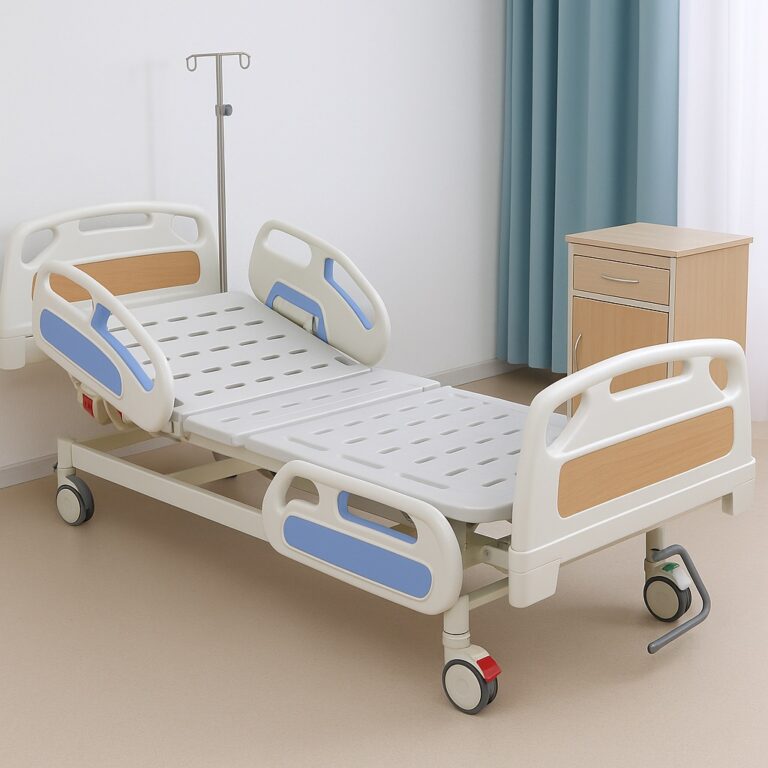
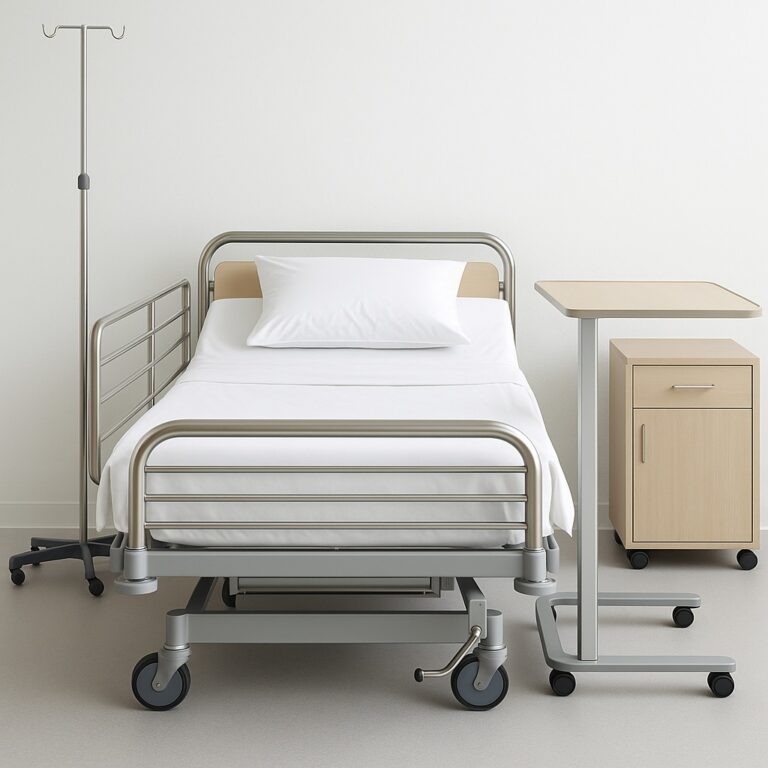
You buy beds to work, not to worry. Let’s keep this practical, a bit punchy, and grounded in what actually happens on the ward and in long-term care. Below you’ll find clear takeaways, real scenes, and simple tables you can skim fast. We’ll tie every point back to Hospital Bed Furniture components you actually spec and buy—casters, side rails, head & foot boards, overbed tables, the whole set.
Hospital Bed Furniture Load Ratings — what really matters
Why you care: load rating isn’t a nice-to-have. It’s uptime, fewer “hey the deck is flexing” calls at 2 a.m., and smoother shifts.
Plain truth: static numbers don’t tell the whole story. Real life = dynamic load (sit-to-stand, lateral scoot, deck adjustments). You want a load band that fits your population plus headroom.
Hospital Bed Furniture Load Ratings — standard vs heavy-duty vs extra-wide
Corners get bumped. By sheets carts, IV poles, and yep—shins. Sharp edges chip, crack, and snag linens. Rounded profiles and clean transitions pay for themselves in silence.
Side Rails, Head & Foot Boards, Overbed Table — edge & gap checkpoints
Side rails: smooth radii, robust latch feel, consistent gap geometry. Avoid rails that “bounce” after lockdown. That bounce becomes a pinch. See Hospital Bed Side Rail.
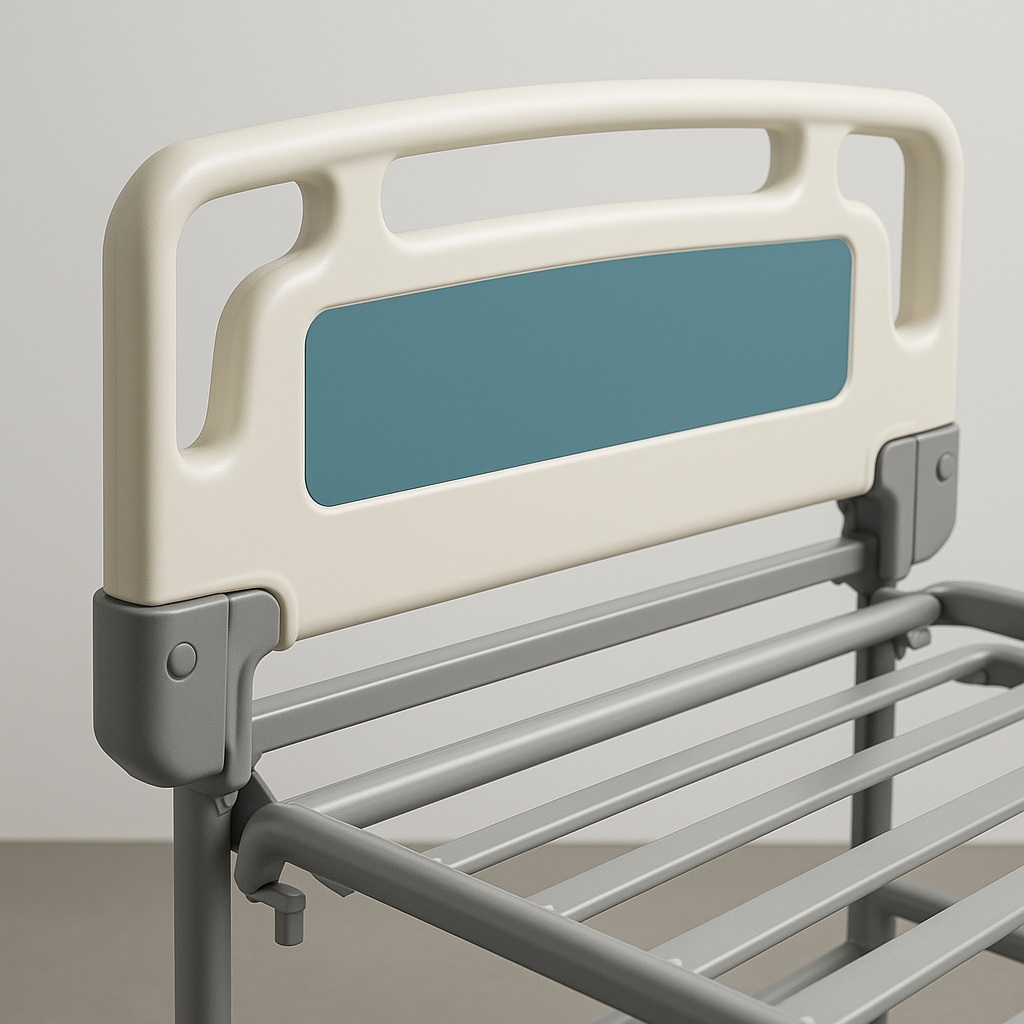
Head & foot boards: rounded corners, rigid mounts, no proud fasteners. Quick-release is great, but not if it rattles. See Hospital Bed Head & Foot.
Real-world scene: night shift pushes a bed through a narrow door; the foot board clips the frame. Good corners survive. Bad corners turn into a sharp burr. And that burr gets someone, eventually. Dont let it.
Hospital Bed Furniture Anti-Tip Design — stability you can feel
If a bed feels tippy, staff won’t raise it to the ergonomic height they actually need. They’ll hunch, they’ll rush, and things go sideways. Stability isn’t a spec line; it’s confidence.
Casters, Brakes, Base Geometry — real-world anti-tip factors
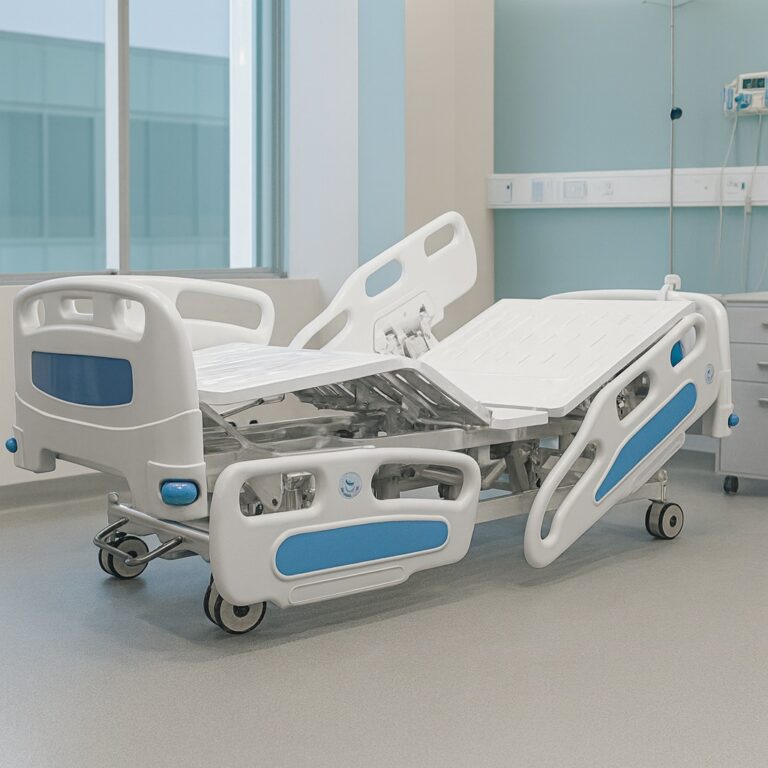
Casters: size, tread, swivel resistance, and load rating. Cheap casters chatter; great casters track straight under load. Try Hospital Bed Castor.
Brake system: toe-tap simplicity, no half-locked purgatory. Brakes must hold on vinyl and tile, not just on paper.
Base geometry: wider stance + lower center of gravity = fewer “whoa” moments at full height or when rails get used as grab bars.
Deck movement: when the deck raises, does the mass stay centered? Or crawl toward the foot? That matters.
IV rods & accessories: add-ons change balance. Spec the set as a system, not piece-by-piece guesses—see Hospital Drip Stand IV Rod.
Table 3. Stability map (what to test in the demo room)
Small messy truth: staff will stand on the base to reach something. Should they? nah. Will they? sometimes. A stable base forgives human reality.
Procurement Checklist: Hospital Bed Furniture (OEM/ODM ready)
This is the checklist buyers and distributors actually use. Pin it to the PO.
Hospital Bed Furniture — buyer’s quick checklist
Population fit: standard vs heavy-duty vs extra-wide. Don’t under-spec for a high-BMI mix.
Frame & deck: no flex at the seated edge; articulation doesn’t twist the frame.
Rails: one-hand latch; no rebound; consistent gaps; options from 4 to 8 bars for different wards—Hospital Bed Side Rail.
Head & foot: rounded corners; secure mounts; quick-release without rattle—Head & Foot.
Casters & brakes: rated for bed + mattress + accessories; brakes that simply lock and hold—Hospital Bed Castor.
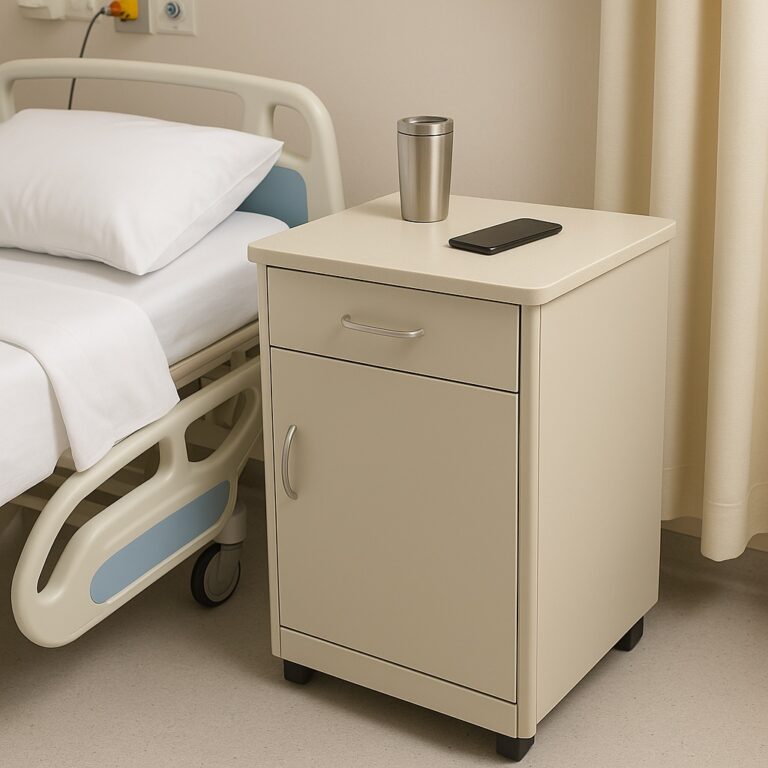
Overbed table: stable column; edge radius; top finish that survives daily wipe-downs—Overbed Table Board.
Accessories fit: IV rod mounts, crank handles (if manual), mattress fitment—no weird tolerances: IV Rod, Crank Handle, Mattress.
Serviceability: common spares (rails, latches, casters) available in bulk.
Docs: clear assembly steps; simple labeling on moving parts.
Use cases (real scenes, not lab talk)
Tight corridors: go rounded head/foot corners, protected edges, and casters that track without shimmy. Staff will thank you later.
Mixed acuity floor: heavy-duty load band, stiffer rails (6–8 bars), and brake systems that hold firm during quick turns.
Extra-wide rooms: wider stance base + high-capacity casters + extra-wide boards so rails don’t feel like afterthoughts.
Home-care setups: simpler crank handles (less to teach), quiet rails, and overbed tables with no drift. Fewer callbacks.
Business value (HOSPITAL BED SOLUTIONS, OEM/ODM, bulk)
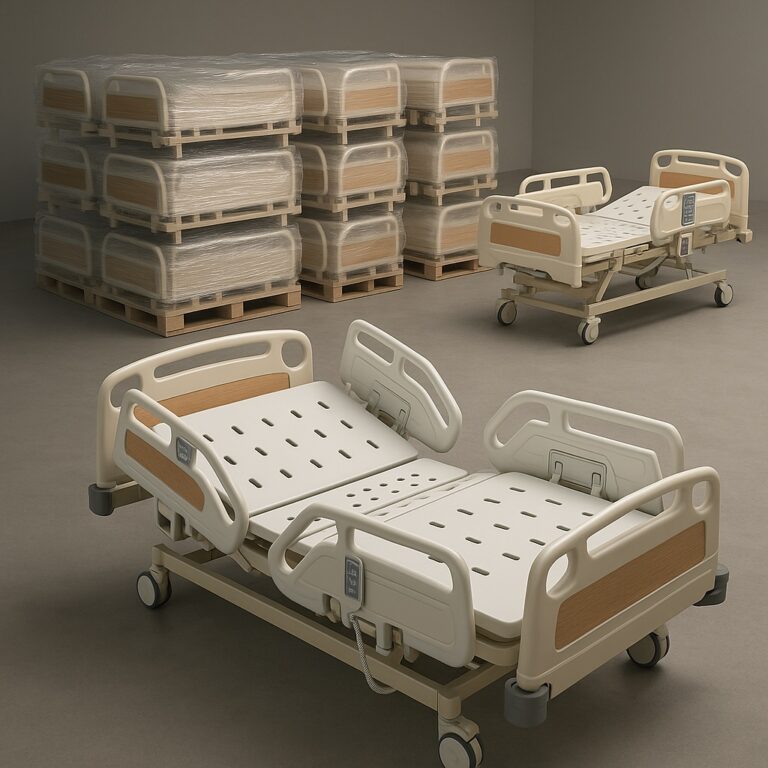
You’re not buying a single bed. You’re building a fleet that behaves the same way. That’s why we package HOSPITAL BED SOLUTIONS—frames + rails + casters + boards + tables that fit together clean, ship in volume, and keep your maintenance playbook short. OEM/ODM? Yep. We tailor rail counts, board profiles, caster loads, and even crank handle geometry for your channel and local norms. Fewer SKUs, fewer surprises, faster rollouts.
Pick the right load band, demand smart corners & edges, and insist on real anti-tip stability. When those three click, staff feel safer, residents feel steadier, and your beds just…work. If you want a short-list spec built around your ward mix, ping us. We’ll map a parts set from our Hospital Bed Furniture range and ship it as a single, clean kit—our kind of simple.