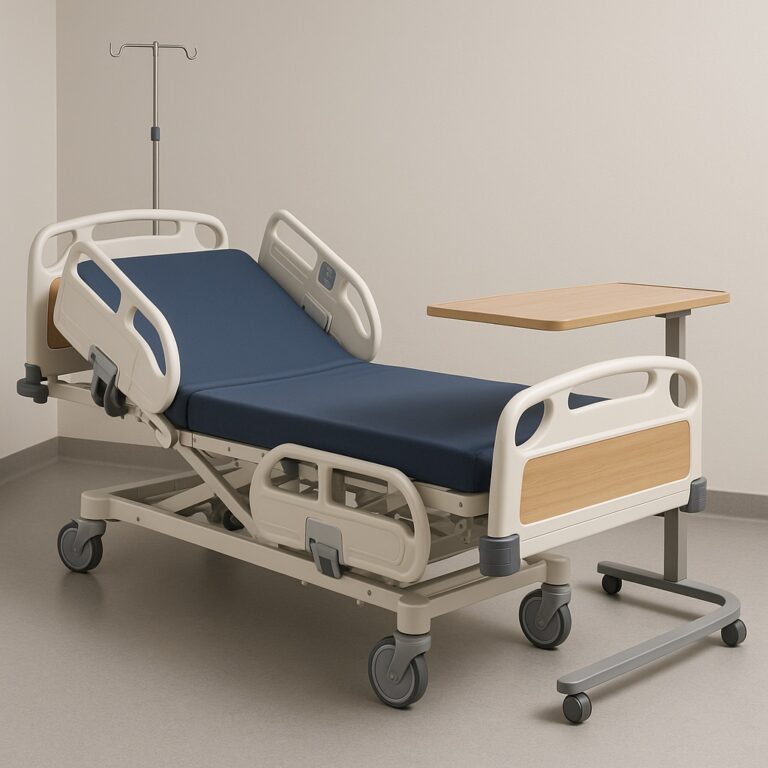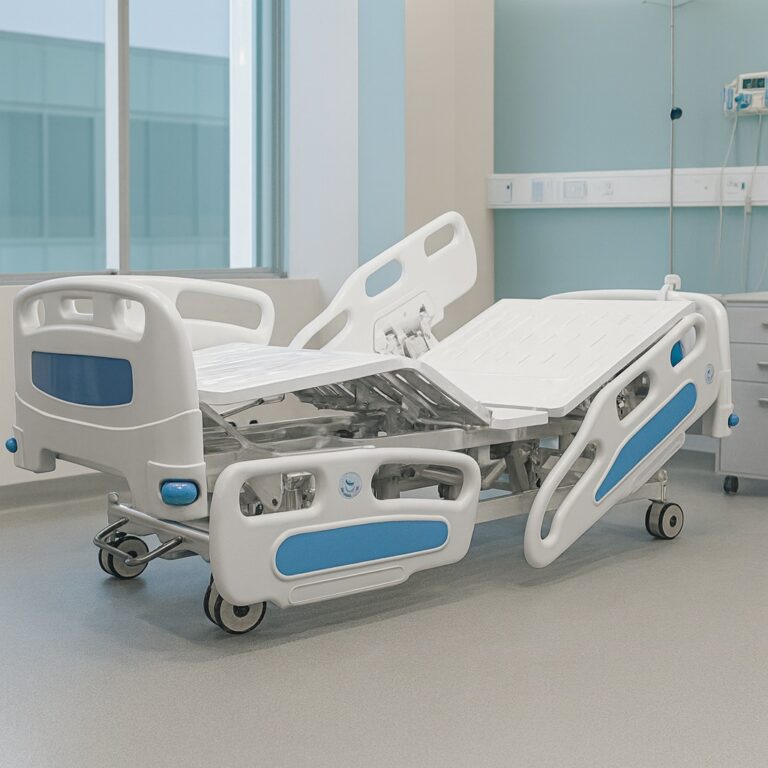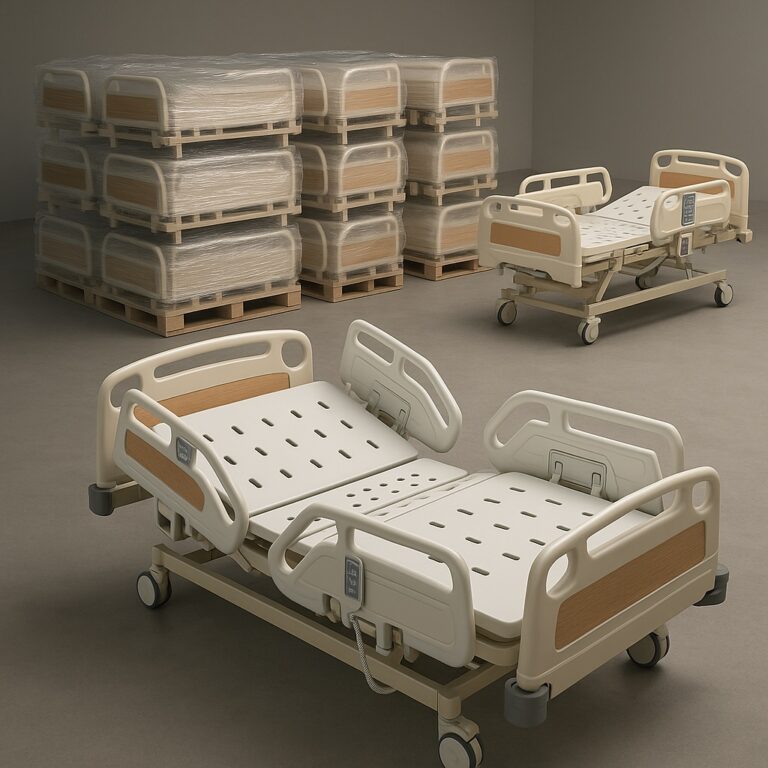
Choosing the right hospital overbed table isn’t just about furniture. It’s about workflow, safety, and giving patients a small sense of control in a tough environment. When distributors or hospital buyers look at their options, they often realize these tables carry more value than expected. From height range to infection-control surfaces, details decide whether the table is a good fit or a daily headache.
At Medequip Supplier, we design and supply Hospital Overbed Tables that match professional standards and bulk-order demands. Let’s break down what makes the best overbed tables stand out.
Height Adjustment Range Matters
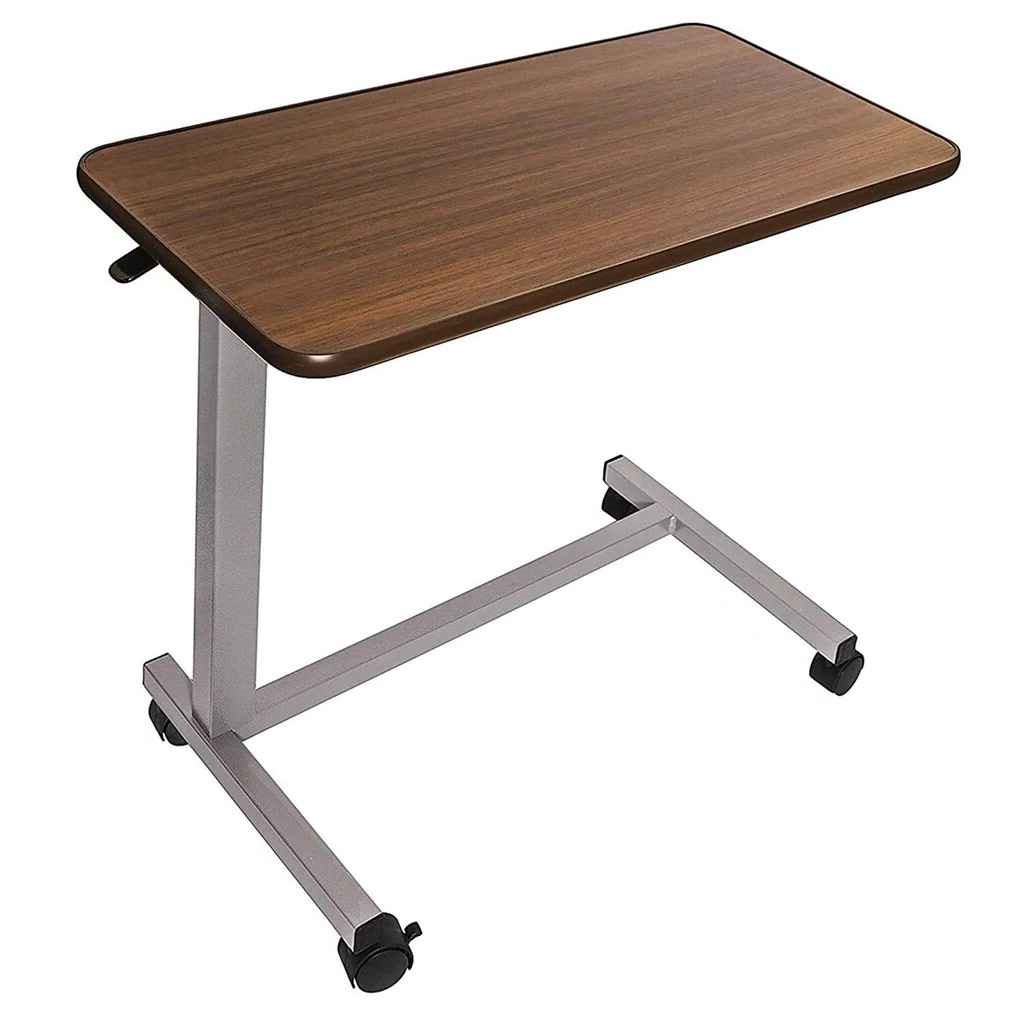
One of the first specs buyers ask about is height range. A standard hospital bed needs a table that adjusts between 27–42 inches. Some advanced designs stretch a little more, like 25.6–40.6 inches, which means they fit not only beds but also chairs in a patient room.
For low hospital beds, buyers must check the minimum clearance. Some low beds sit just 3.25 inches off the floor. In that case, only a table with a low-base design (19–28 inches range) will slide in without hitting the bed frame.
Key Point: If you’re supplying to facilities with mixed bed models, always look for tables that cover a wide range.
Base Design: C-Base vs U-Base
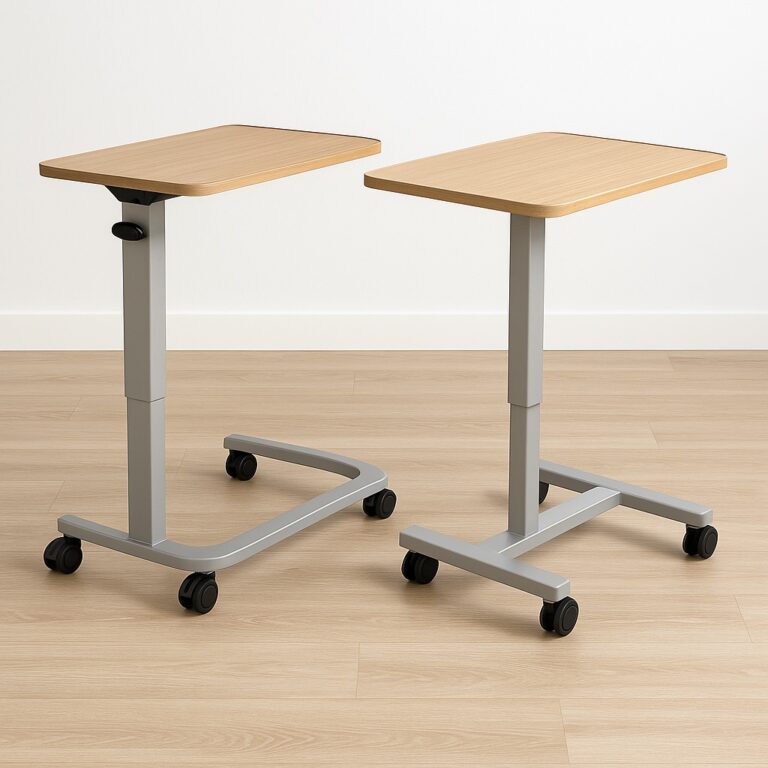
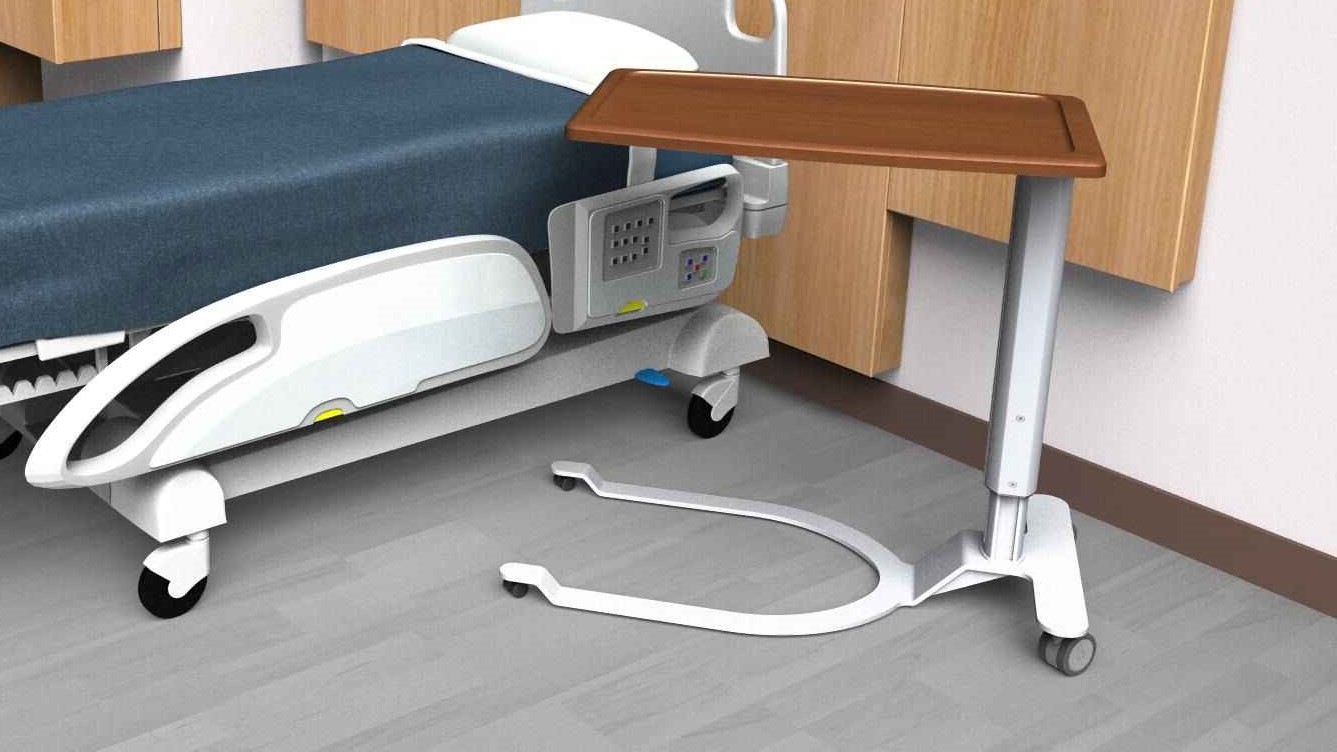
The base shape often decides how versatile the table is.
- C-base: Works great for standard beds, gives stable support.
- Low U-base: Slides under recliners, wheelchairs, and beds with unique frames.
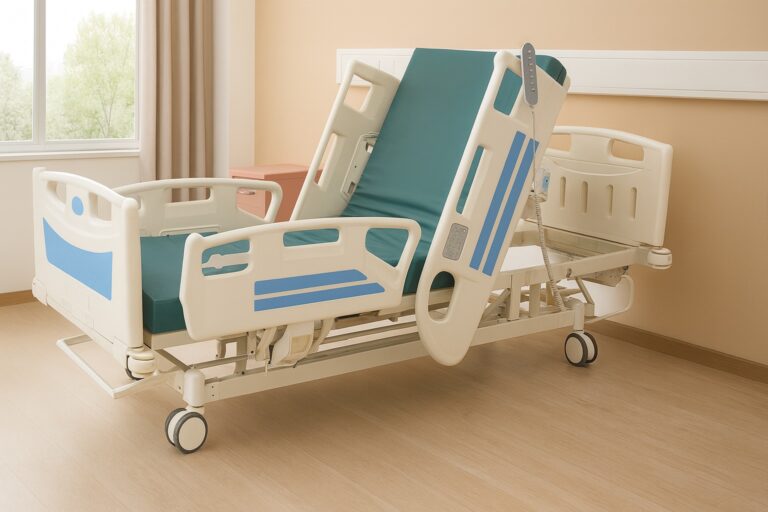
Hospitals with varied equipment usually order both styles to cover every scenario. That’s why OEM/ODM HOSPITAL BED SOLUTIONS often include matching table designs, ensuring the furniture aligns with the beds.
Table 1: Height & Base Compatibility
| Table Type | Height Range | Base Style | Best For |
|---|---|---|---|
| Standard Overbed Table | 27–42″ | C-Base | General hospital rooms |
| Low-Bed Overbed Table | 19–28″ | Low U-Base | Geriatric wards, low beds |
| Wide Range Model | 25.6–40.6″ | C or U | Mixed-use spaces |
Weight Capacity and Stability
Weight rating is a hidden but critical factor. A typical overbed table supports around 100 lbs. That’s enough for trays, devices, or laptops.
But in bariatric rooms or ICUs, you’ll find tables rated up to 500 lbs. These reinforced tables prevent tipping and give peace of mind. It’s not about patients stacking bricks on them—it’s about handling unexpected loads without failure.
Buyer Tip: Always check if your supplier offers both standard and bariatric versions. At scale, mixing both keeps costs down and meets hospital safety standards.
Mobility and Locking Features
Nurses move these tables dozens of times per shift. Smooth casters are non-negotiable. The best models roll easily on different flooring—vinyl, tile, or even carpet.
Equally important: locking mechanisms. Without brakes, a table may drift while someone is eating or using a laptop. A small lock makes a big difference in day-to-day comfort.
Infection Control Is the New Priority
In today’s healthcare world, infection control is more than a checkbox. Overbed tables are classified as high-touch surfaces. That puts them on the same level as bed rails or call buttons for cleaning schedules.
The smartest tables now come with:
- Seamless thermoplastic or Corian® tops – no cracks for dirt to hide.
- Spill guards – can hold up to 36 oz of liquid.
- Bleach-cleanable surfaces – withstand strong disinfectants.
- Exposed steel low-bases – easy to wipe under and around.
Hospitals doing bulk upgrades almost always demand this spec now. For distributors, it’s a sales edge.
Table 2: Infection-Control Features Comparison
| Feature | Standard Table | Advanced Table |
|---|---|---|
| Seamless Top | No | Yes |
| Spill Guard | Basic edge | Holds ~36 oz |
| Bleach Resistance | Partial | Full |
| Low-Base Cleaning | Moderate | Easy |
Real-World Scenarios
Let’s look at how different facilities use these tables:
- General Hospital Room: A C-base table with 27–42″ height works for meals, charts, and personal items.
- Long-Term Care Facility: Residents often sit in recliners or lower beds, so low U-base tables prevent clearance problems.
- High-Acuity Units: Bariatric beds need reinforced tables with higher load capacity and wide surfaces.
- Geriatric Care Homes: Families appreciate tables with cup holders or small drawers—little things that add comfort.
By matching hospital overbed tables to the exact setting, distributors avoid returns and win trust from procurement teams.
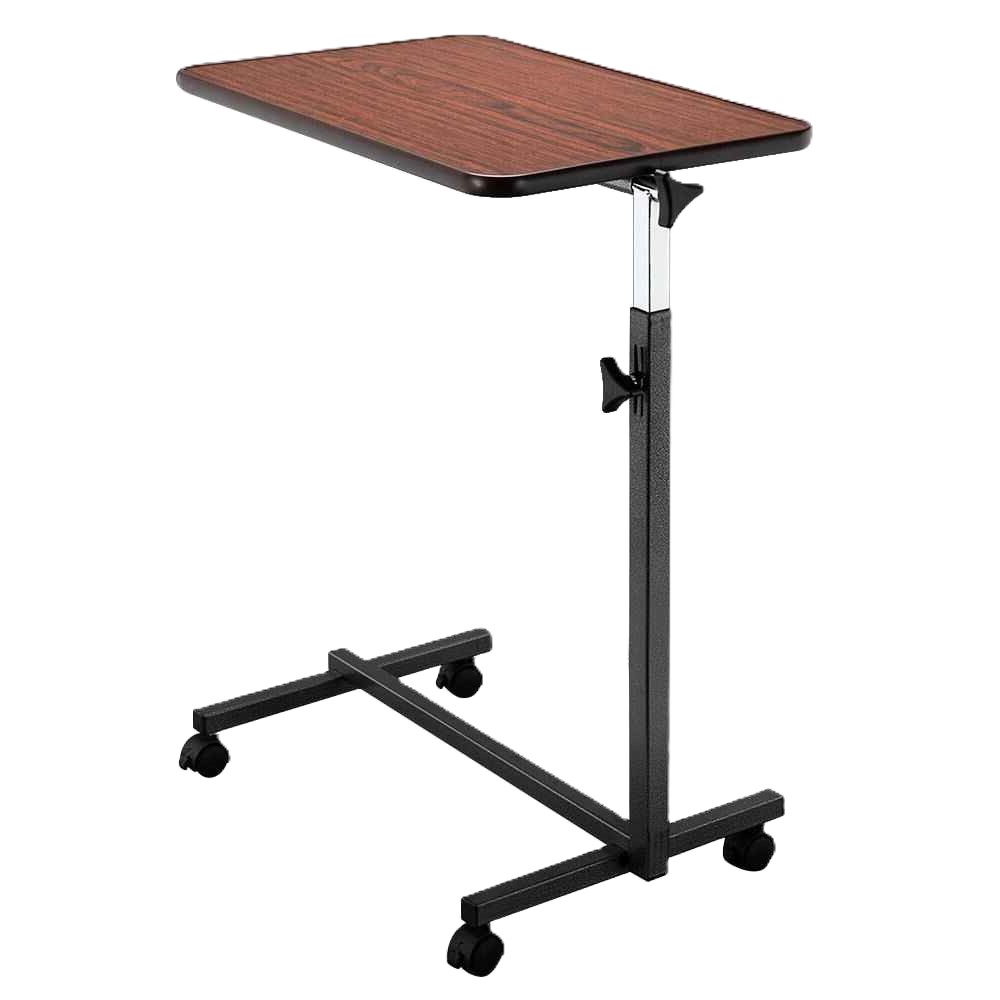
Patient-Friendly Features
Not every table is just flat wood or steel. Premium models bring extra usability:
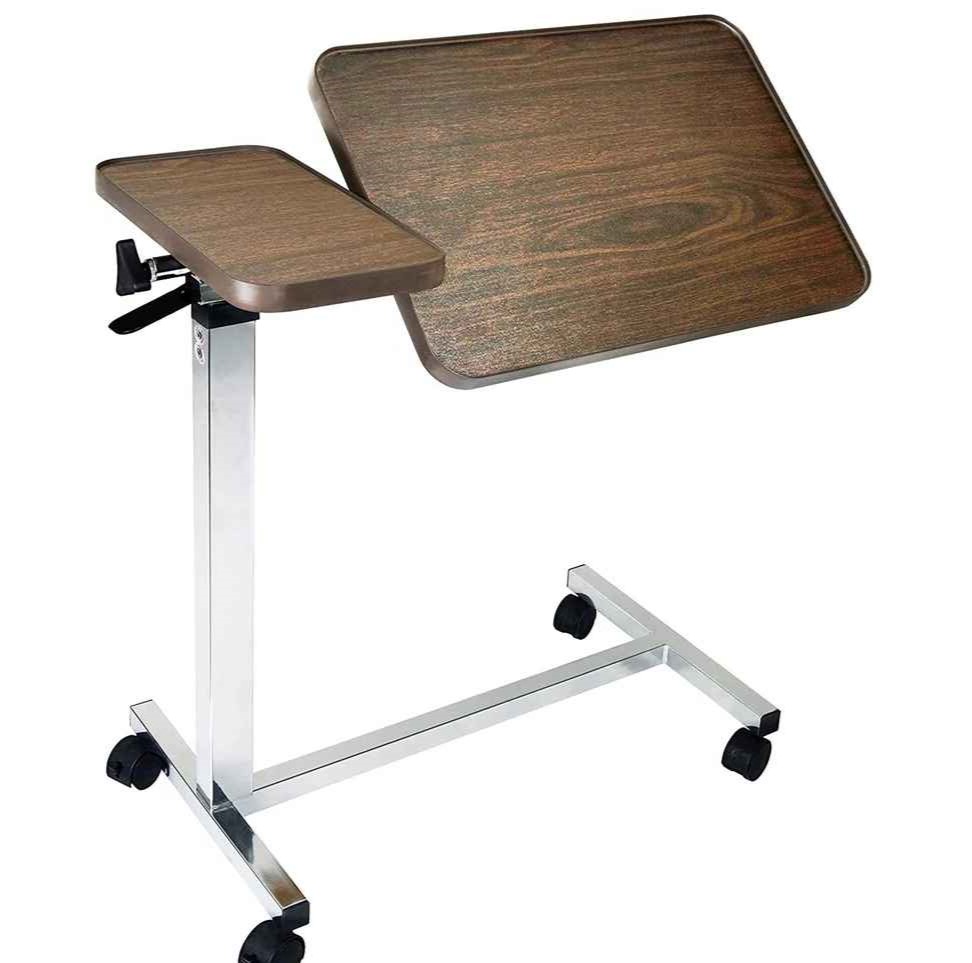
- Tilted surfaces for reading or tablet use.
- Split tops that allow food and writing side by side.
- Accessory rails to hang equipment or personal bags.
- Drawer units for personal items.
Hospitals that invest in these features often see better patient satisfaction scores. For suppliers, it’s a nice upsell option.
Business Value for Buyers
Why should a hospital procurement manager or distributor care? Because overbed tables are repeat volume purchases. They wear down faster than hospital beds. They move constantly, get cleaned harshly, and often end up in bulk replacement cycles.
By sourcing from an OEM/ODM supplier like Medequip Supplier, buyers get:
- Customization: Choose height, base, and top material that fits local needs.
- Bulk pricing: Ideal for distributors and importers.
- Consistency: Tables match hospital beds and bedside cabinets in finish and design.
- Brand leverage: Distributors can sell under their own label.
It’s not just selling a table—it’s offering a HOSPITAL BED SOLUTION package.
Table 3: Buyer Pain Points vs Supplier Solutions
| Buyer Pain Point | Our Solution |
|---|---|
| Mixed bed models, clearance issues | Wide range + low-base options |
| Infection control demands | Seamless tops, bleach safe |
| Volume replacement cycles | OEM/ODM bulk production |
| Need brand identity | Private label, custom finishes |
| Logistics headaches | Flat-pack or assembled shipping |
Wrapping Up
The best hospital overbed tables aren’t one-size-fits-all. A facility that only buys basic models might save a little upfront, but they’ll face daily complaints and faster replacement cycles. On the other hand, choosing models with wide height ranges, strong casters, infection-control surfaces, and bariatric options means smoother operations and happier patients.
For distributors, importers, and procurement managers, these details matter. And with OEM/ODM hospital furniture manufacturing, you don’t have to settle for generic. You can order exactly what your market demands—from standard overbed tables to specialized models—while keeping your brand front and center.
So, when someone asks “what’s the best overbed table for hospital rooms?” the honest answer is: the one that fits your beds, your staff workflow, and your long-term cost plan. That’s where the right partner makes the difference.
Explore our Hospital Overbed Table line and see how it fits into your next HOSPITAL BED SOLUTIONS package.